Advanced rider training can benefit every motorcyclist, from beginners to seasoned veterans, by enhancing skills, safety, and confidence on the road.
Who should consider Advanced Rider Training?
The answer is straightforward: all types of riders stand to gain. Whether you've just completed a basic rider course, have decades of experience, or are adapting to a new motorcycle, continuing education is essential. Riding skills, like any other skills, can become rusty over time, especially during inactive months when motorcycles are stored away for winter. Investing time in advanced training not only refreshes your abilities but also heightens your enjoyment of the sport.
Many riders who complete advanced training express surprise at the insights they've gained and the improvements they've made in their riding. Familiar programs across Ontario address various skill levels, ensuring all riders can find a training course suited to their needs. Notably, every course allows participants to train on their own motorcycles, fostering a comfortable learning environment.
Rider Training Institute Courses
The Rider Training Institute (RTI) offers two key courses focusing on advanced skills, tailored to meet diverse rider requirements.
Technical Skills Course
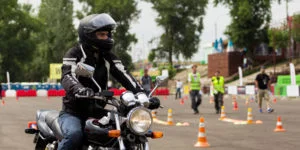
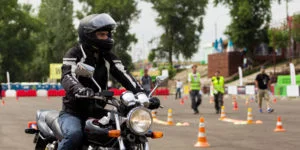
This one-day course is perfect for riders holding a full M or M2 license who may feel uneasy after a break from riding or are adjusting to a new bike with distinct characteristics. Participants will gain insights into how their motorcycle reacts in various scenarios, all within a safe, controlled parking lot environment.
Sharron St. Croix, Executive Director, emphasizes that this controlled setting enables riders to practice and perfect necessary skills before transitioning to road riding. The morning session hones slow-speed maneuvers, an essential area where many riders struggle. This segment also includes a review of appropriate riding gear for touring purposes.
In the afternoon, the focus shifts to collision avoidance techniques, which incorporate advanced braking and cornering strategies. Participants learn about combining front and rear braking, as well as how to judge speed accurately while navigating curves and reacting to obstacles. The course culminates in an obstacle course, compelling riders to apply their newly acquired skills.
Roadworthy Skills Course
A new offering this year, the Roadworthy Skills course addresses the needs of M2 or M riders aiming to enhance their skills ahead of group rides. The morning session includes a skills assessment to help participants feel more confident on their motorcycles. In the afternoon, riders embark on a group ride to a scenic location, where they learn tips for riding in groups.
Course locations for RTI include North York, Scarborough, Guelph, and Oakville. Private lessons are also available throughout Ontario, assisting riders in polishing their skills on their own motorcycles. For more information, you can contact RTI through their website or by calling 416-516-6151 or 1-866-876-1551.
Georgian College Training
At Georgian College, professional evaluations of riding skills significantly enhance rider safety, as noted by Jenn Martin, Coordinating Chief Instructor. The college offers several phases of rider development tailored to varying skill levels.
Rider Development Phases 1 and 2
Phase 1 comprises three hours in a parking lot with a focus on low-speed handling techniques, while Phase 2 occurs at higher speeds, sharpening collision avoidance strategies—skills riders must practice continuously, according to Martin.
Experienced Rider Course
Aimed at intermediate riders, this six-hour program combines parking lot skills with real-world riding. Participants receive live feedback from instructors on essential topics like U-turns on narrow roads and navigating unpredictable situations. Smaller class sizes allow for personalized instruction, encouraging riders to ask questions openly.
Students enrolling in these classes must hold an M2 or M license and ride a legal, insured motorcycle. For more details about classes, contact Georgian College at 705-722-1511.
Sharp Rider Motorcycle Training
Sharp Rider offers a unique approach by incorporating Total Control techniques developed by former racer Lee Parks. This methodology emphasizes a comprehensive understanding of why skills work, which aids learning.
The curriculum covers physical, mental, and mechanical aspects of riding. Mental training focuses on concentration and managing fear, while mechanical skills enhance traction management and stability, critical for rider safety. As Donna Skinner, Lead ARC Instructor at Sharp Rider, suggests, mastering essential techniques can help riders react appropriately under pressure, which could prove life-saving.
Intermediate Riding Clinic
For those wanting to expand their skills, this clinic covers throttle control, braking techniques, and effective collision avoidance, boosting overall confidence on the road.
Total Control Levels 1 and 2
Level 1 introduces foundational skills through a combination of classroom discussions and practical exercises in parking lots. Level 2 delves into advanced skills, moving participants from proficiency to mastery in areas such as speeding techniques and chassis setup. Notably, students must have a minimum of 5,000 kilometers of riding experience before taking Levels 1 and 2.
For more information on Sharp Rider, you can visit their website or call 647-885-1801.
Humber College
Humber College offers a Precision Riding program focusing on group needs and tailored training. Their curriculum emphasizes slow-speed maneuvers, which are crucial given that many accidents occur at lower speeds.
Program Manager Andy Hertel highlights the tailored nature of their courses, ensuring riders build skills gradually and are challenged appropriately based on individual capabilities. Throughout the six-hour program, participants practice slow riding, U-turns, and intersection strategies, honing their skills incrementally.
Riders interested in this program should have completed a basic motorcycle training course and have sufficient street riding experience. For booking inquiries, contact Andy Hertel via email at [email protected].
With so many advanced rider training options available, all riders can enhance their skills, safety, and overall enjoyment of motorcycling. Whether on a familiar bike or new, investing in training is a wise choice. From improving confidence to mastering new techniques, the benefits of skilled training are considerable.


