Arkansas’ final 2027 filings set average increases at 7.6% for individual plans and 8.9% for small-group coverage, with two carriers exiting.

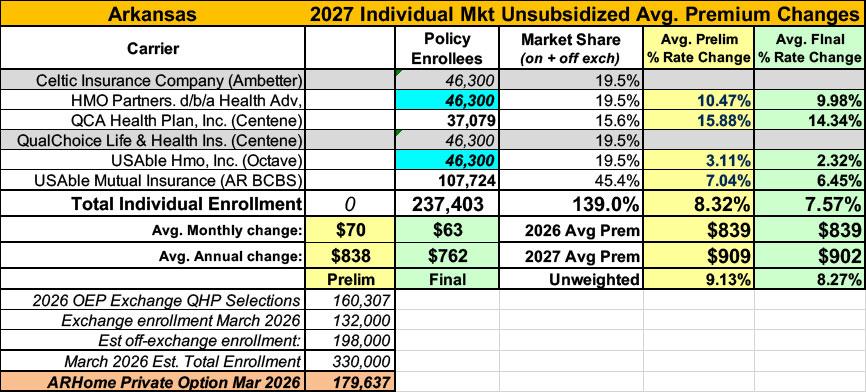
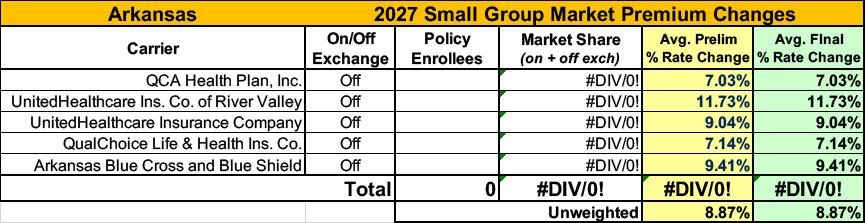
Arkansas’ final average rate increases for 2027 are 7.6% in the individual market and 8.9% for small-group plans. The figures reflect approved filings released just before Open Enrollment, and the individual-market calculation accounts for two carriers leaving the market. That exit changes how the average should be read: the increase applies to the remaining market, while people enrolled with departing carriers may need to consider other available plans.

The final individual-market average is lower than the preliminary estimate of 8.8% reported in an earlier account, but the comparison needs context. That earlier estimate included enrollees associated with Celtic Insurance Company and QualChoice Life and Health Insurance Company, two Centene subsidiaries that did not file rates for 2027. Removing those carriers from the calculation raised the weighted average, even though the final filings included slight reductions for each of the individual-market carriers that remained.
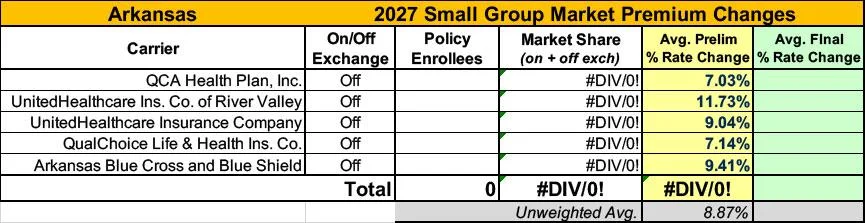
The small-group filings came through unchanged from the preliminary requests: carriers’ proposed increases were approved as submitted, leaving the unweighted average at about 8.9%. For employers reviewing next year’s coverage, that marketwide figure describes the average across filings; it doesn’t indicate what any one employer’s renewal will be.
What the preliminary filings showed
Before final rates were available, filings showed individual-market proposals ranging from 3.1% to 15.9%. Arkansas Blue Cross and Blue Shield proposed increases from 3.1% for plans offered through USAble HMO Inc. to 10.5% for plans through its HMO Partners Inc. affiliate. Centene’s QCA Health Plan Inc. proposed a 15.9% increase.
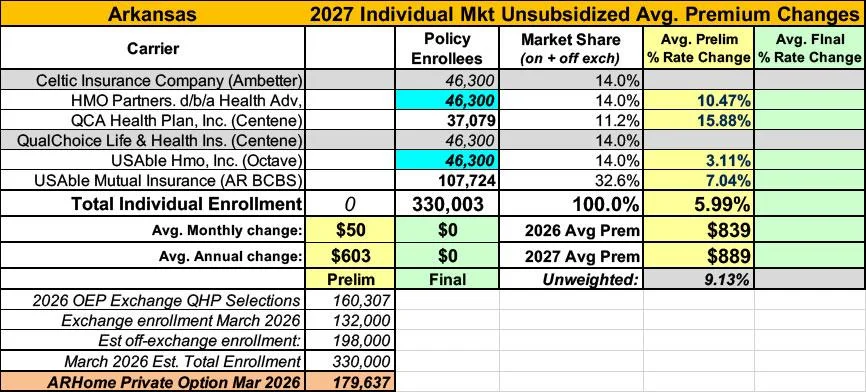
The filings also gave enrollment figures for two carriers. QCA Health Plan listed 37,079 enrollees in spring 2026, while USAble Mutual listed 107,724. Those figures helped refine an initial estimate, but enrollment for the other carriers wasn’t available in the cited filings. The earlier analysis estimated roughly 185,000 enrollees across the four remaining carriers, then divided that figure evenly because the actual carrier-by-carrier totals weren’t known. That produced a preliminary estimate near 6.0% on a weighted basis. Without weighting by estimated enrollment, the average was about 9.1%.
The final 7.6% figure therefore supersedes those preliminary calculations. It also illustrates why market averages can move when carrier participation changes: the result depends both on each carrier’s proposed increase and on how many people are enrolled with each one. When precise enrollment data is missing, a weighted estimate has to rely on assumptions that can materially affect the outcome.
Enrollment gives the rate changes more context
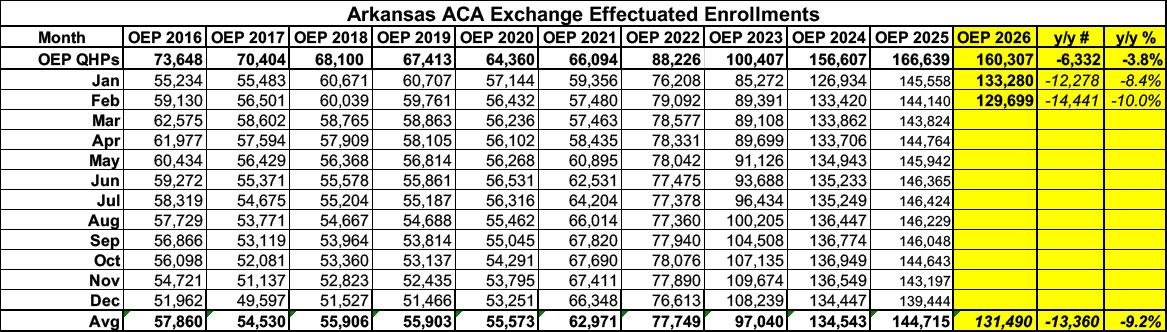
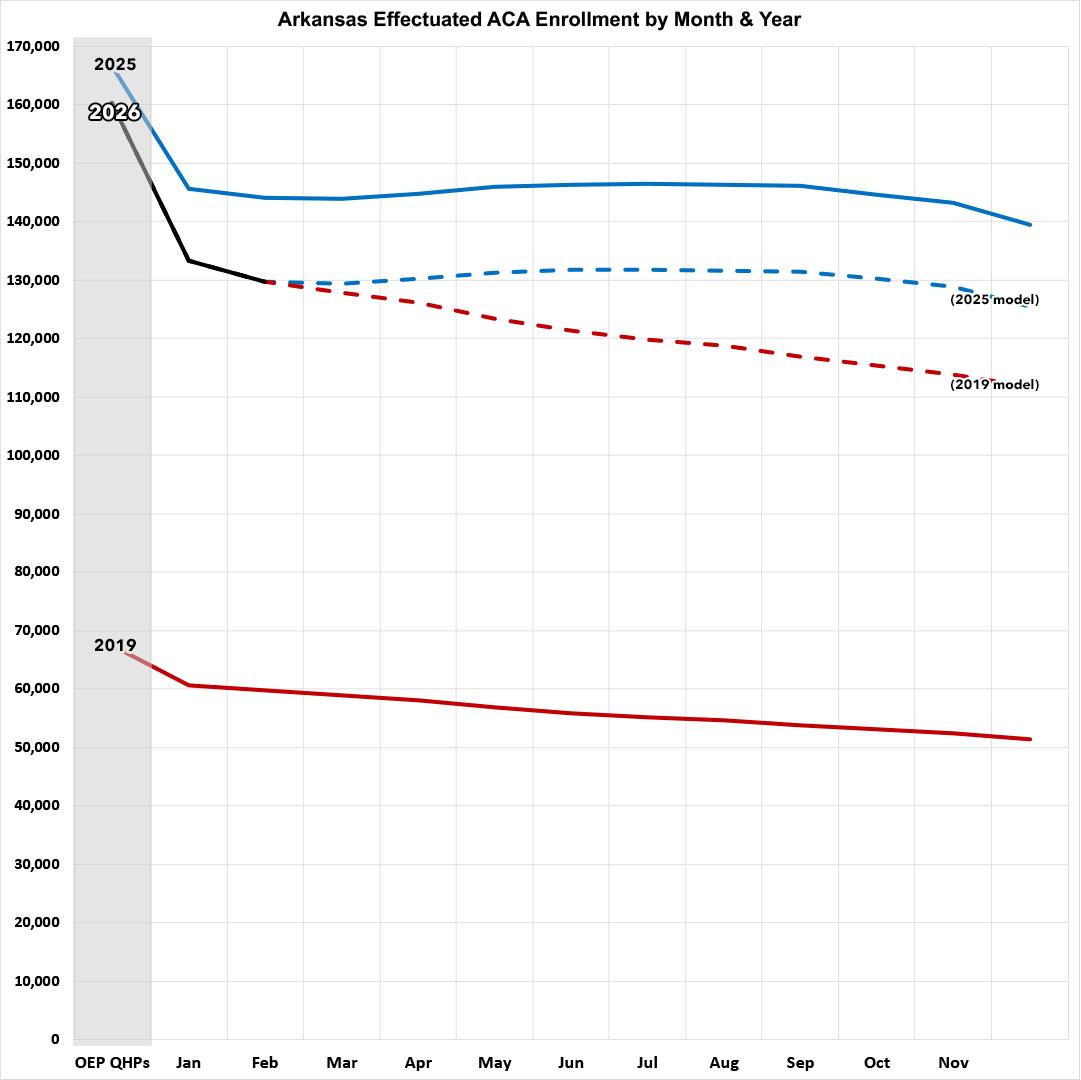
Arkansas had about 130,000 effectuated individual-market enrollees in February, roughly 14,000 fewer than a year earlier and a decline of 10%. Initial signups had been down 3.8% compared with the previous Open Enrollment Period, but the count of people whose coverage took effect fell by more than 8% in January and by 10% in February. The account reported that marketplace plans covered about 131,000 people as of July 15, suggesting enrollment had held close to its February level and risen slightly.
Arkansas, Illinois and Washington introduced Premium Alignment pricing in 2026. Through February, their reported enrollment declines were 10.0% in Arkansas, 0.4% in Illinois and 8.8% in Washington. The national average decline excluding those three states was 12.3%. These comparisons show different enrollment patterns over that period; they don’t establish why enrollment changed or predict what will happen in 2027. [Illinois figures](https://acasignups.net/rate_changes/2027/il) and [Washington figures](https://acasignups.net/rate_changes/2027/wa) provide additional comparisons.
A separate enrollment group complicates comparisons in Arkansas. The state’s ARHOME program covers people through individual-market plans outside the exchange, with coverage costs supported through Medicaid expansion funding and state funding. Although these enrollees aren’t counted as exchange enrollment, they are included in the annual rate filings and risk pool. The source cited 163,452 ARHOME enrollees in one report and used a March count of 179,637 for its estimate, reflecting the different reporting periods.
Combining roughly 130,000 exchange enrollees, about 180,000 ARHOME enrollees and an estimated 20,000 off-exchange individual-market enrollees produced an approximate statewide total of 330,000 people in the rate pool. That is a rough calculation, not a final count. It helps explain why exchange enrollment figures alone don’t capture everyone whose coverage is reflected in the individual-market filings.
What policyholders and employers can take from the figures
For individuals, the statewide average is useful for understanding the direction of rates, but it doesn’t show the change for a specific plan or household. Plan benefits, the carrier offering the plan and a person’s eligibility for financial assistance can all affect what they pay. The source connected the earlier enrollment decline to the expiration of enhanced subsidies at the end of the prior year, which made coverage more expensive for some consumers. It also described the possibility that healthier people would be more likely to drop coverage when premiums rose, a factor insurers considered in their rate requests.
For small employers, the 8.9% average likewise isn’t a quote for a particular group. Renewal costs depend on the group’s circumstances and chosen coverage. Employers can review renewal materials, compare available options and check how the proposed rate relates to the benefits and provider access in each plan.
The useful takeaway is that Arkansas’ final individual-market average settled at 7.6% after two carriers exited, while small-group increases remained at their requested level. Anyone reviewing 2027 coverage should use the final filing figures as market context and check the actual renewal or plan offer for the cost and coverage that apply to them.