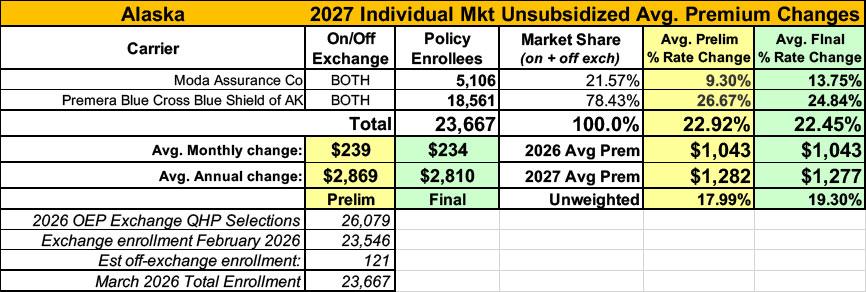
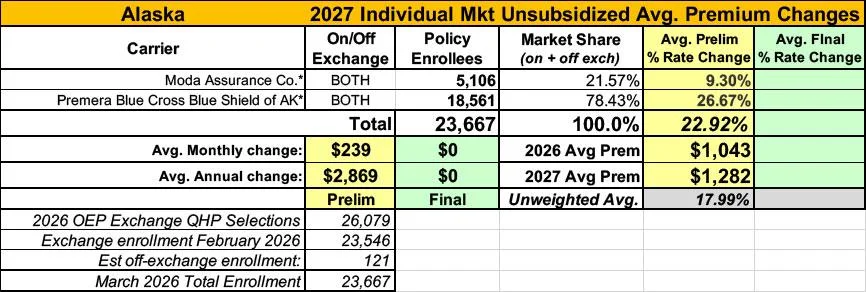
Final 2027 filings put Alaska’s weighted average individual-market increase at 22.5%, while small-group rates rise 17.4%.
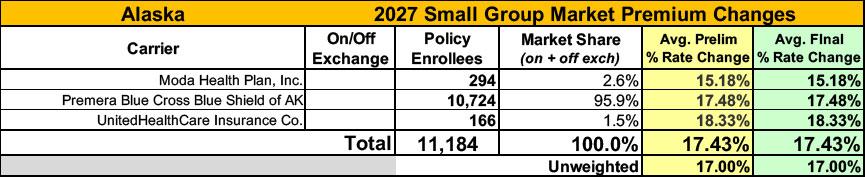
Alaska’s final 2027 health insurance rates bring steep increases across both the individual and small-group markets. The weighted average increase for individual-market enrollees is 22.5%, down slightly from the preliminary 22.9% estimate. Small-group rates will rise by an average of 17.4%, with the proposed increases unchanged.
The final figures were posted on October 31, 2026, one day before the next open enrollment period began. Moda Health Plan’s individual-market increase ended up higher than requested, while Premera Blue Cross Blue Shield of Alaska’s increase was lower. The combined result is a small reduction from the preliminary weighted average. For people who buy their own coverage, the filings point to substantially higher premiums in 2027.
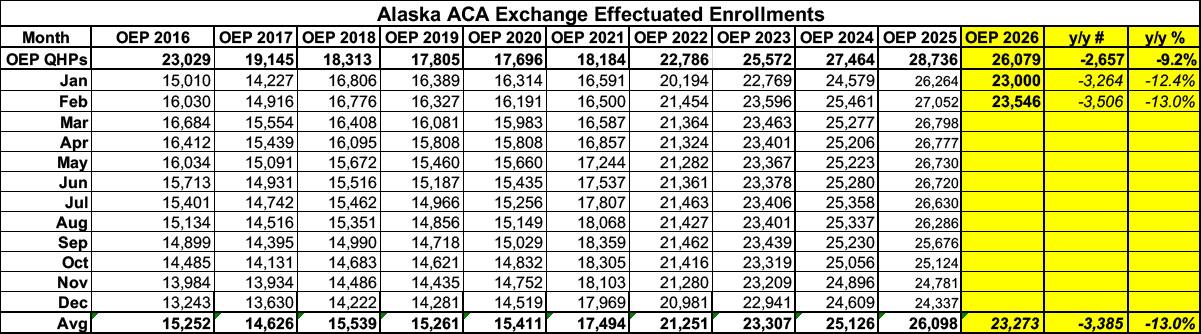
Enrollment has fallen as subsidies expired
The rate changes follow a sharp drop in Alaska’s individual-market enrollment after enhanced subsidies ended at the close of 2025. Initial signups during the 2026 open enrollment period were 9.2% below the 2025 period. Enrollment in active coverage was down more than 12% year over year in January 2026, and the decline reached 13% in February.
Because Alaska’s individual market is small, the February decrease represented about 3,400 people losing coverage. That statewide figure is limited in scale, but it means many affected households no longer had a plan through the exchange. Enrollment comparisons for 2025 and 2019—the last year before the pandemic and before the enhanced subsidies—show how the market has changed over time.

Different pressures shaped the insurer filings
Moda’s final filing lists an average individual-market increase of 9.30%, with plan-level changes ranging from 5.36% to 15.58%. The change affects 5,106 people. Its pricing relied on 2025 experience, which Moda described as fully credible based on 79,029 member months, above the 65,000 needed for full credibility.
Moda cited its emerging Alaska experience and a 9.7% annual trend as major factors. Its 2025 results also led it to expect a smaller reinsurance offset to claims and a larger risk-adjustment payment than assumed in its prior filing. The projection used 24 months of trend to move 2025 experience forward to the January 1, 2027 start date. Age, geography, health mix, risk adjustment and reinsurance also affect the rates.
Moda’s stated 2027 premium allocation is 89.03% for claims, 5.96% for administration and commissions, 3.01% for taxes and fees, and 2.00% for surplus, profit and risk margin.
Premera is renewing all eight of its existing metal-tier plans, which will be sold through the exchange. It currently covers 18,561 members in those plans. Its final average increase is lower than the preliminary 26.7% request; the proposed plan-level range had been 24.8% to 29.9%.
Premera pointed to medical and prescription drug cost inflation, greater use of care, and claims experience that was worse than expected. The filing cited a 9.1% medical and pharmacy claims trend and a 12.1% demographic adjustment. Premera attributed the demographic change to membership losses after enhanced subsidies expired: people with lower health care use were more likely to leave as prices rose, leaving a pool with higher average utilization. The company estimated annual medical and pharmacy cost inflation of 4.7%, plus 4.1% annual growth in service use.
Premera plans changes to member cost sharing
Premera’s 2027 plan adjustments change deductibles, out-of-pocket limits and office visit costs. Preferred Gold and Alaska One Gold deductibles rise from $1,500 to $2,000, while their out-of-pocket maximums increase from $6,350 to $7,000. Their primary care copay falls from $30 to $25.
Preferred Silver deductibles move from $4,500 to $5,000, and out-of-pocket maximums increase from $8,100 to $8,900. Primary care visits will have a $30 copay and specialist visits a $65 copay. Preferred Bronze HSA’s out-of-pocket maximum rises from $8,000 to $8,500. Preferred Bronze deductibles go from $6,350 to $7,000, with the out-of-pocket maximum rising from $8,700 to $10,000. Standard Bronze deductibles increase from $7,500 to $7,750.
For Standard Gold and Standard Silver, non-preferred brand-name drugs and specialty drugs will move to cost sharing after the deductible, at 50% or 40%. Premera estimated that the benefit changes together reduce costs by 0.9%.
Premera reported operating income of $19,284,484 for this business in 2025, but projected an operating loss in 2026. Its filing estimates a 3.0% operating income margin in 2027 based on the requested increase. Taxes and exchange fees account for 4.1% of premium; other administrative costs account for 6.8%, a 0.7 percentage-point decrease from the prior year. The premium also includes a 3.0% contingency and risk charge. Premera said it expects to exceed the required medical loss ratio for 2027.
Small-group rates rise 17.4%
Small employers and their covered workers face a 17.4% average increase in Alaska’s small-group market. Those increases were finalized as filed. The individual-market weighted average is projected to push the average monthly premium for unsubsidized enrollees to $1,282.
For households and small businesses budgeting for 2027, the averages are a starting point: individual plan changes vary, and Premera’s cost-sharing updates may affect what members pay when they use care. Reviewing renewal materials and comparing available plan details can help clarify how the new premium and benefits fit a particular situation.
===