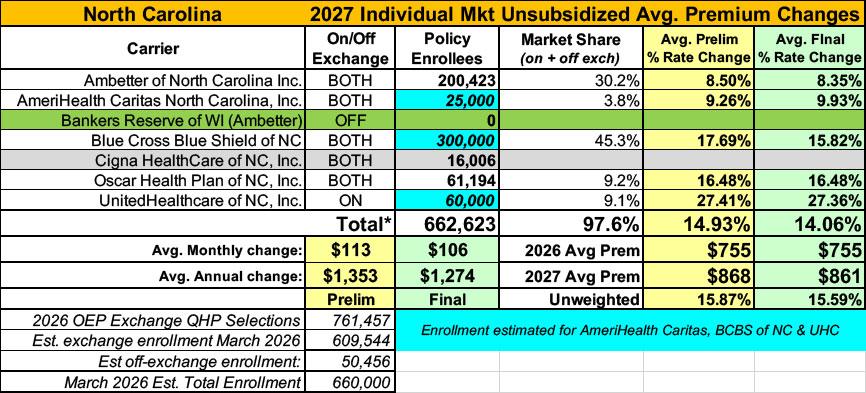
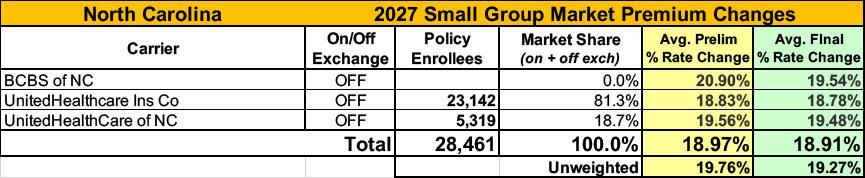
Approved 2027 rates rise an average 14.1% in North Carolina’s individual market and 18.9% in its small group market.

North Carolina’s approved 2027 health insurance rates remain close to preliminary proposals: average increases are 14.1% in the individual market and 18.9% in the small group market. The final figures, posted in the federal Rate Review database as open enrollment began, give individuals and employers a clearer view of next year’s pricing.

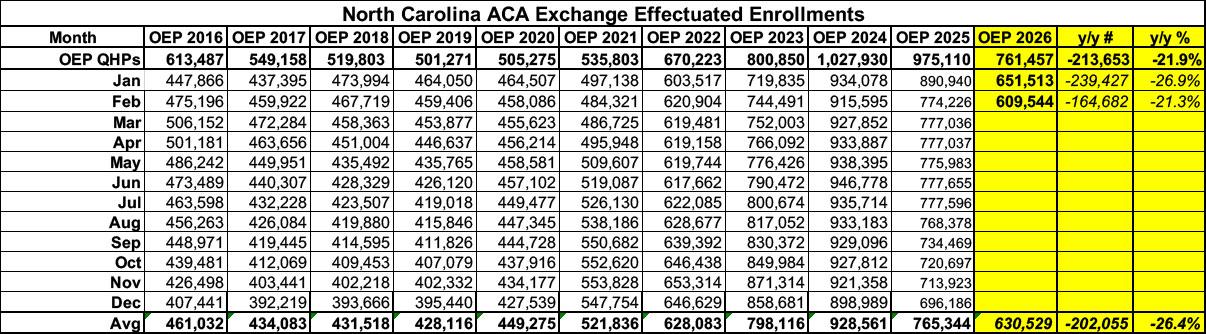
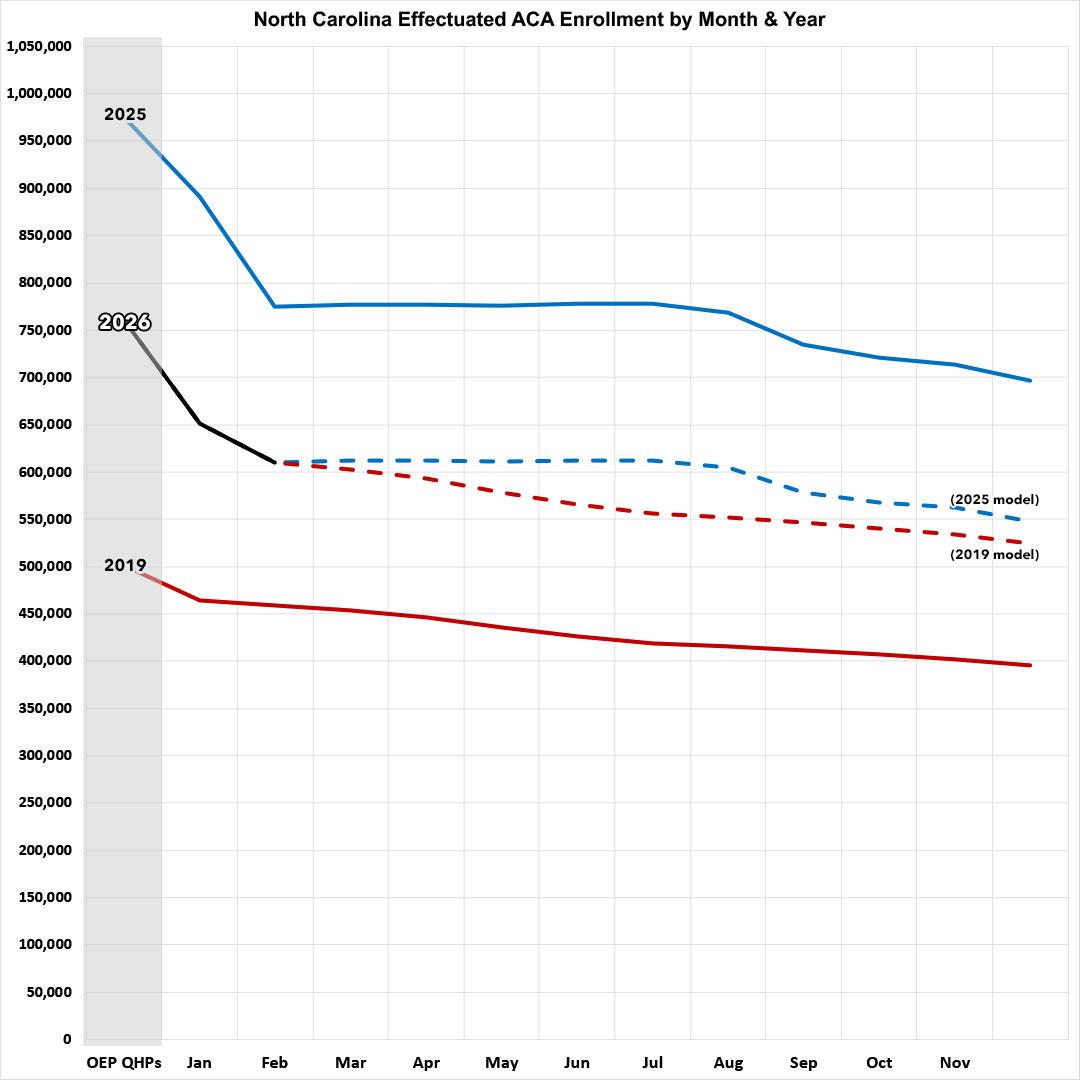
The individual market also faces a shrinking enrollment base. The source reports that enrollment had fallen by more than 26% since enhanced federal subsidies expired at the end of 2025. The year over year decline reached 27% in January, partly reflecting an unusually steep drop in effectuated enrollment in January 2025. Across the first two months of 2026, the figures averaged just over 200,000 North Carolinians losing coverage.
The comparison with 2025 and 2019—the last pre-pandemic year, before the enhanced subsidies—puts the recent enrollment movement in context.
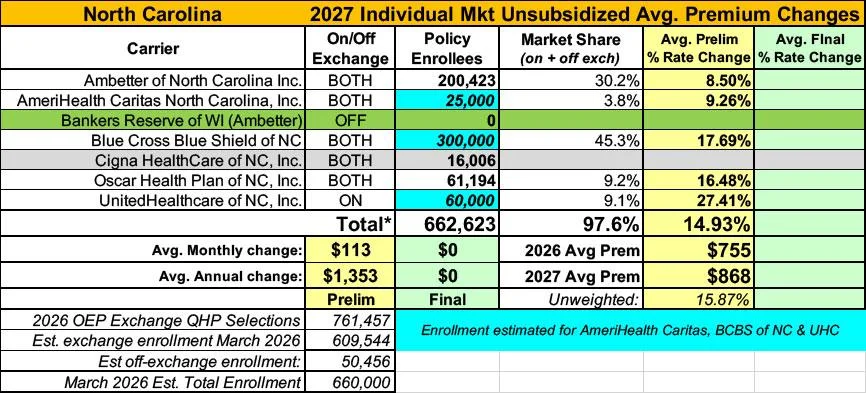
Individual market rates and insurer changes
Before final adjustments, insurers’ filings offered a mixed picture. Ambetter of North Carolina proposed an 8.5% increase, affecting about 200,423 people. Its filing attributed the change to projected increases in medical service costs, updated claims and enrollment experience, administrative expenses, risk adjustment assumptions, morbidity and medical trend. Ambetter reported 2025 earned premiums of $589.28 per member per month and incurred claims of $434.46, equal to 73.73% of premium. After estimated risk adjustment transfers, its estimated loss ratio was 76.17%.
Ambetter projected 2027 administrative expenses of $96.40 per member per month, excluding $26.13 for taxes and fees. Its historical 2026 administrative expenses were $87.20 per member per month, also excluding taxes and fees. The company projected an 82% loss ratio for 2027, above the 80% federal minimum cited in its filing.
The filing describes medical trend as a combination of higher unit prices and changes in how much or what kind of care people use. For example, replacing an X-ray with an MRI can raise total costs because the more intensive service costs more. Ambetter cautioned that its projections are estimates and that actual results can differ with claims, enrollment changes and other experience.
Blue Cross and Blue Shield of North Carolina proposed an average increase of 17.7%, excluding changes tied to member age, effective January 1, 2027. Its individual plan renewal changes ranged from 7.8% to 22.9%. A member’s actual premium change can vary with location, age, dependents and other rating factors.
Blue Cross NC cited rising prices for hospital, physician and pharmacy services, including specialty drugs, alongside increased use of care. It also projected that the end of enhanced premium tax credits and other changes described in its filing would contribute to continued enrollment declines. The insurer said a smaller membership could raise the average health needs of those remaining and increase operating costs per member. Its stated cost efforts include negotiating hospital discounts, provider partnerships, early intervention programs and tools to help members make care decisions.
Oscar Health Plan of Pennsylvania, Inc., which filed for its North Carolina individual products, proposed an average 18% increase for renewing plans, based on business in force as of March 2026. The estimate excludes age-related changes and was expected to affect 61,194 members. Oscar said plan-level changes differ because of benefit design and cost sharing, among other factors.
Oscar’s filing pointed to medical and prescription drug inflation, changes in service use, taxes and fees, administrative expenses and its targeted risk margin. It also cited anticipated shifts in the covered population’s health needs, network configuration and provider costs. The company said benefit revisions reflect changes to the actuarial value calculator, state requirements and product decisions.
UnitedHealthcare of North Carolina filed 2027 individual rates, but key figures—including its average increase, affected enrollment, premium and claims experience—were redacted as trade secrets. The filing said plan-level rate changes vary with plan design changes and noted that the company had made no significant benefit changes. It cited higher provider reimbursement, more use of services and differences in the intensity of care as cost pressures.
Cigna Healthcare of North Carolina plans to stop offering individual medical coverage in the state on January 1, 2027. Its filing listed 16,006 affected people across on-exchange and off-exchange plans. The company said it would continue offering individual dental coverage in North Carolina. Its notice described advance written communication to affected members, with draft notices due to be issued by July 1, 2026.
How the statewide estimates were built
The preliminary statewide individual market estimate was an approximate, enrollment-weighted calculation, not a simple average of insurer filings. The author had effectuated enrollment data for only two of the five carriers expected to participate in both years. For the others, the estimate used prior-year enrollment, confirmed February 2026 on-exchange enrollment, an assumption that about 10% of total enrollment was off-exchange, and rough projections from the North Carolina Insurance Department.
The estimate assumed roughly 660,000 people had effectuated coverage as of March 2026. About 375,000 of those were allocated as follows: 25,000 to AmeriHealth Caritas, 300,000 to Blue Cross NC and 60,000 to UnitedHealthcare. On those assumptions, the preliminary semi-weighted individual market increase was estimated at about 14.9%. Final approved filings brought the reported market average to 14.1%.
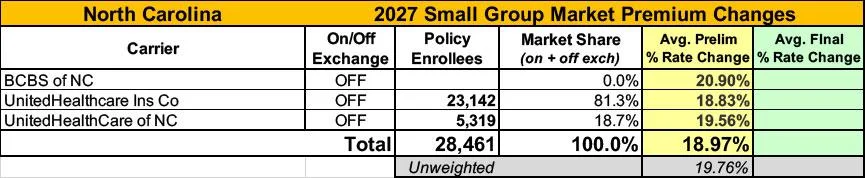
The small group market’s carriers were initially seeking increases of roughly 20%. After minor changes in the final filings, the approved average increase was 18.9%. For employers and individuals reviewing 2027 costs, the final averages are a starting point: actual premiums can differ by insurer, plan, location, age and coverage details.