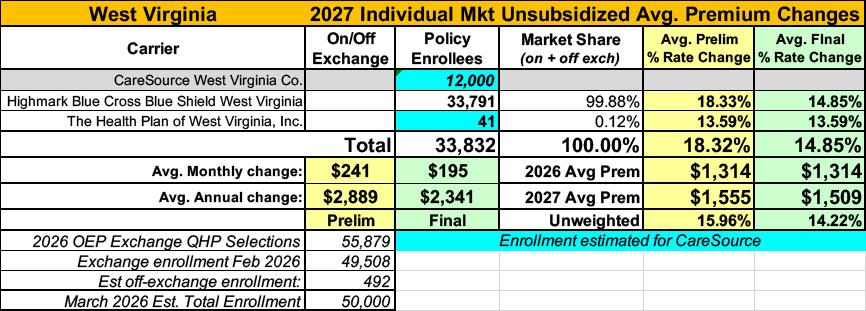
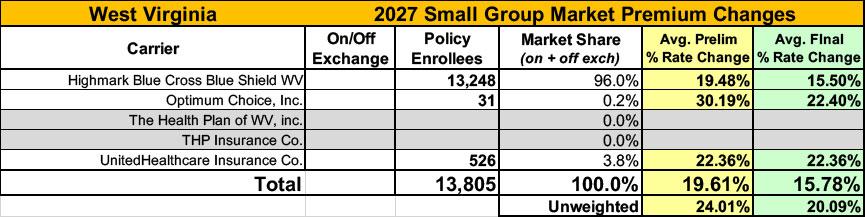
Approved 2027 rate increases in West Virginia are 14.9% for individual plans and 15.8% for small group coverage, after lower final adjustments.

West Virginia’s approved average health insurance rate increases for 2027 are lower than the figures insurers initially requested, but they remain substantial: 14.9% in the individual market and 15.8% in the small group market. The revised individual market figure reflects a reduction to Highmark BCBS WV’s request, from 18.3% to 14.9%. Highmark’s dominant position in the market means its approved change also sets the weighted average for individual coverage.

Enrollment remains below last year
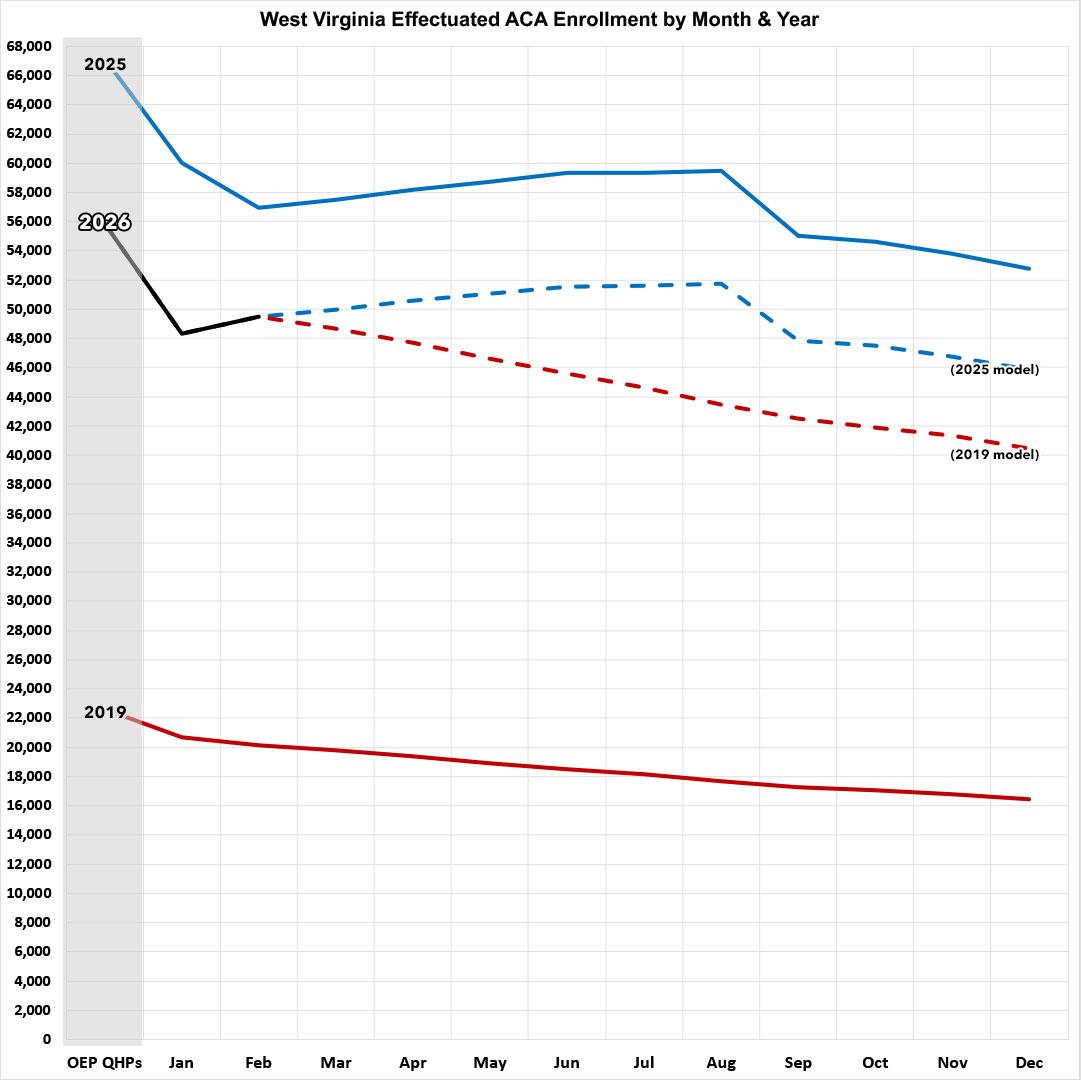
The rate decisions arrive as enrollment in West Virginia’s ACA exchange has fallen. Enrollment was down 13% from the prior year after enhanced federal subsidies expired at the end of 2025. Signups during the 2026 Open Enrollment Period were nearly 17% below the 2025 period. By February, however, the decline in effectuated enrollment—the coverage that had taken effect—was about 13% year over year.
The month-to-month figures offer a more mixed picture. Effectuated enrollment was nearly 20% lower year over year in January, then rose slightly between January and February. The source describes that increase as an unusual result compared with other states that year. Whether it signals a lasting shift is unclear; the available figures cover only the early months of 2026.

The accompanying comparison includes 2025 and 2019, the last year before the COVID period and before enhanced subsidies were in place. It gives readers a longer view of enrollment, but the figures alone don’t establish why people enrolled or left coverage in any particular month.
What changed between the request and the final rate
Highmark West Virginia had requested an average 18.3% increase for its ACA individual market plans, with proposed changes ranging from 15.1% to 21.8%. The filing projected that the products would cover 33,791 members and apply from January 1 through December 31, 2027. The final approved average increase was reduced to 14.9%.
Highmark reported an underwriting gain in its individual market business in 2025. For its proposed 2027 rates, the company pointed to higher projected medical costs across service types, reflecting both expected use of care and average costs per service. It also said it changed some cost-sharing features to meet federal actuarial-value requirements. Those are the filing’s stated factors; the available information doesn’t assign a separate share of the final increase to each one.
The Health Plan of West Virginia’s proposed individual market rate details were redacted in the material cited by the source. That limits what can be said about the carrier’s requested increase and makes any marketwide estimate based on enrollment assumptions less certain.
Carrier exits shape the market outlook
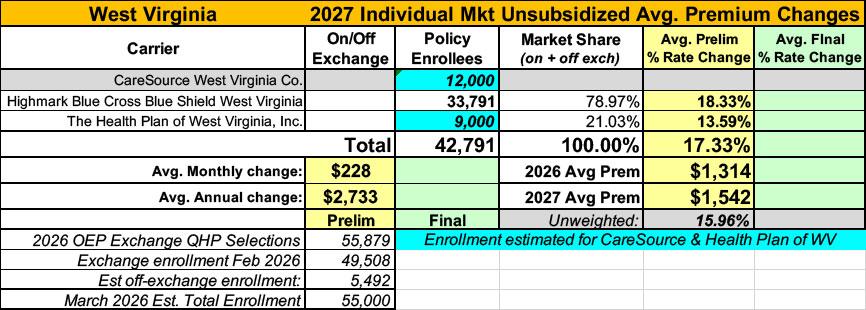
CareSource is leaving West Virginia’s individual market, leaving Highmark BCBS and The Health Plan of West Virginia as the two participating carriers described in the source. Because the author did not have effectuated enrollment figures for CareSource or The Health Plan, the preliminary estimate used approximate exchange enrollment of 12,000 members for CareSource and 9,000 for The Health Plan.
Using those estimates, the preliminary weighted average increase requested across the individual market was about 17.3%. That estimate was a projection, not the final approved average. The later 14.9% figure reflects the final adjustment to Highmark’s rate and its near-monopoly position, as described in the source.
The source also estimated that average unsubsidized ACA premiums would exceed $1,500 per enrollee per month in 2027. This refers to full-price premiums before subsidies are applied; an individual’s actual cost can depend on eligibility and plan details. The estimate was based on preliminary filings and enrollment assumptions, so it should be read as an estimate rather than a quote for a particular person.
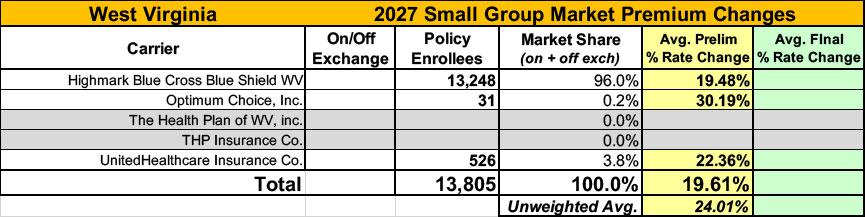
The small group market is also seeing a carrier departure: The Health Plan of West Virginia is expected to leave that market in 2027. The preliminary figures showed three remaining carriers and a weighted average requested increase of 19.6%. The final approved weighted average increase is 15.8%, after reductions to the proposed changes.
What consumers and employers can take from the figures
These are average market changes, not a prediction of the renewal price for every person, employer or plan. Individual results can vary by plan and other rating factors. For people buying their own coverage, the subsidy question matters alongside the listed premium: a full-price increase and a household’s final monthly payment are not the same figure. Small employers should likewise compare their renewal documents with the stated market average and check how the proposed plan’s benefits and cost sharing change.
The final figures provide a firmer reference point than the preliminary requests, while the enrollment data and carrier exits show a market in transition. As 2027 plan details become available, consumers and employers can review the actual renewal terms, compare available options and confirm what their own premium will be before coverage takes effect.